
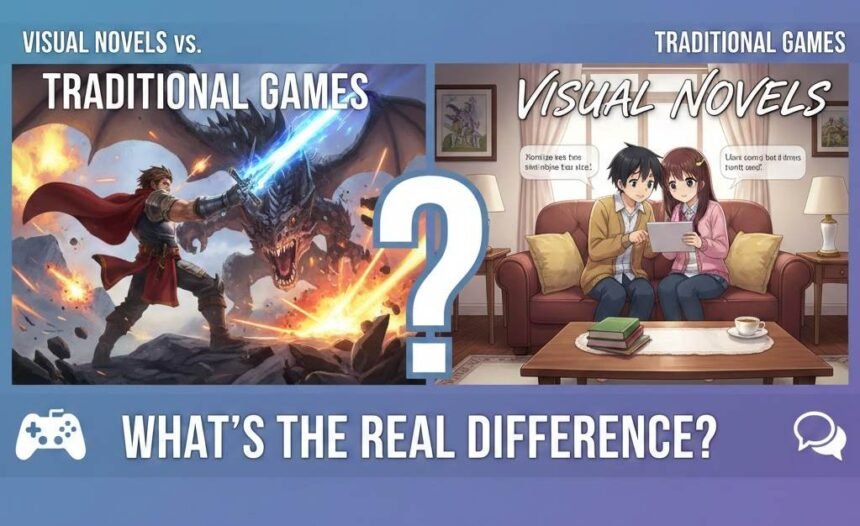
The gaming world has evolved far beyond simple arcade mechanics and high score chases. Today, players can explore emotional storytelling experiences, interactive dramas, and cinematic adventures alongside action-packed shooters and open-world epics. Among these formats, visual novels stand out as a unique genre that often sparks debate. Are they really games? Or are they interactive books?
Understanding the difference between visual novels and traditional games helps players choose experiences that match their preferences.
What Is a Visual Novel
A visual novel is a story-driven interactive experience that focuses primarily on narrative, character development, and player choices. Instead of fast reflexes or combat mechanics, visual novels emphasise reading dialogue, viewing illustrated scenes, and making decisions that shape the storyline.
The genre originated in Japan and gained global recognition through titles such as Clannad, Steins; Gate, and Doki Doki Literature Club!
Core Features of Visual Novels
Visual novels usually include:
- Detailed character artwork and background illustrations
- Dialogue presented in text boxes
- Background music and occasional voice acting
- Branching storylines based on player choices
- Multiple endings
Gameplay is often minimal. Players read through scenes and select dialogue or actions at key decision points. These choices can significantly affect the narrative outcome.
What Is a Traditional Game
Traditional games focus on active gameplay mechanics such as movement, combat, puzzles, strategy, or exploration. Player skill typically plays a central role in progression.
Examples include:
- Action-adventure titles like The Legend of Zelda: Breath of the Wild
- First-person shooters like Call of Duty: Modern Warfare II
- Role-playing games like The Witcher 3: Wild Hunt
Traditional games often involve:
- Real-time player control
- Combat systems
- Complex mechanics
- Skill-based challenges
- Exploration and progression systems
The primary focus is on interaction and mechanics mastery rather than extended reading or static storytelling.
Key Differences Between Visual Novels and Traditional Games
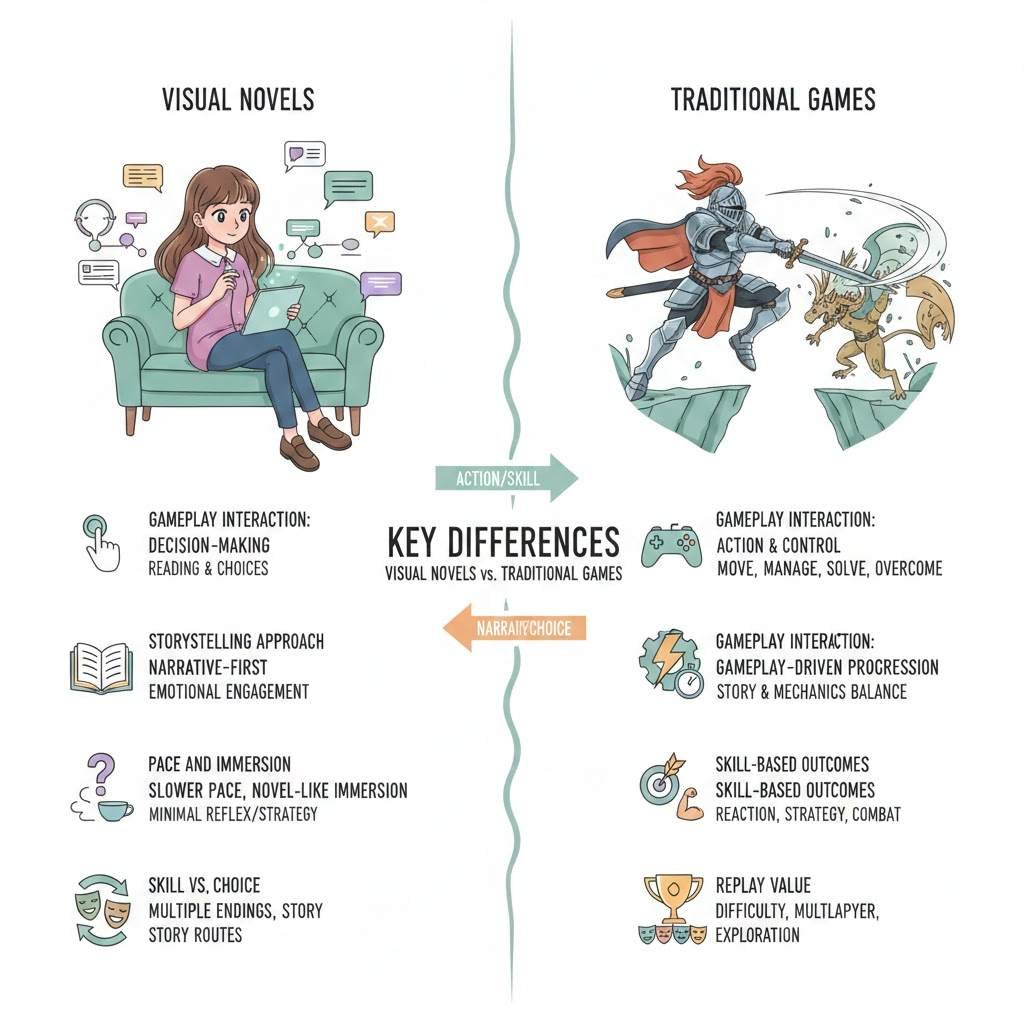
Gameplay Interaction
Visual novels offer limited mechanical interaction. The experience revolves around reading and making narrative choices.
Traditional games demand continuous interaction. Players control characters, manage resources, solve puzzles, and overcome obstacles using skill and timing.
In short, visual novels prioritise decision-making, while traditional games prioritise action and control.
Storytelling Approach
Visual novels are narrative-first experiences. Story is the foundation. Gameplay exists mainly to support emotional engagement and character development.
Traditional games may include strong stories, but gameplay mechanics typically drive progression. Even story-rich games like Red Dead Redemption 2 balance cinematic storytelling with exploration and combat systems.
Pace and Immersion
Visual novels have a slower pace. Players take time to read dialogue and absorb emotional scenes. This creates a novel-like immersion.
Traditional games often move faster. Action sequences, boss battles, and open-world exploration keep the momentum high.
Skill vs Choice
In visual novels, outcomes depend mainly on the choices you make. Success is rarely tied to reflexes or strategic skill.
In traditional games, success often depends on:
- Reaction time
- Strategy
- Resource management
- Combat skill
The challenge level can significantly impact progress.
Replay Value
Visual novels frequently offer multiple endings. Players replay to explore different story routes and character arcs.
Traditional games offer replay value through difficulty modes, multiplayer experiences, exploration, or alternative builds and strategies.
Are Visual Novels Really Games
This question appears often in gaming communities. The answer depends on how you define a game.
If a game requires player interaction and decision-making, then visual novels qualify. They offer branching paths and meaningful choices that alter outcomes.
However, compared to traditional action titles, visual novels may feel closer to interactive fiction or digital storytelling.
Modern hybrid games blur the line even further. For example, narrative-heavy titles like Detroit: Become Human combine cinematic storytelling with interactive mechanics, sitting somewhere between a visual novel and a traditional game.
Who Should Play Visual Novels
Visual novels are ideal for players who:
- Enjoy deep storytelling
- Prefer emotional character-driven narratives
- Like reading rich dialogue
- Want multiple story endings
- Appreciate anime-inspired art styles
They are perfect for relaxing sessions where the focus is immersion rather than competition.
Who Should Choose Traditional Games
Traditional games are better suited for players who:
- Enjoy fast-paced action
- Prefer skill-based challenges
- Like exploring open worlds
- Want multiplayer competition
- Enjoy mastering complex mechanics
These games provide adrenaline, achievement, and active engagement.
Rise of Story Focused Gaming
The gaming industry increasingly blends storytelling and mechanics. Many modern titles combine cinematic narratives with interactive systems. This shift reflects a growing demand for emotional engagement alongside gameplay depth.
Even traditional developers now invest heavily in writing, voice acting, and branching narratives. Meanwhile, visual novels are evolving with improved graphics, animation, and interactive elements.
The gap between the two formats continues to narrow.
Final Thoughts
Visual novels and traditional games serve different purposes, but neither is superior. They deliver different experiences.
Visual novels prioritise story, emotion, and player choice. Traditional games emphasise mechanics, challenge, and action.
The best choice depends on what you want from your gaming experience. If you seek deep narrative immersion, visual novels can be incredibly rewarding. If you crave excitement and hands-on gameplay, traditional games offer endless possibilities.
Both formats contribute meaningfully to modern gaming culture, demonstrating that interactive entertainment can take many forms while still delivering powerful, memorable experiences.